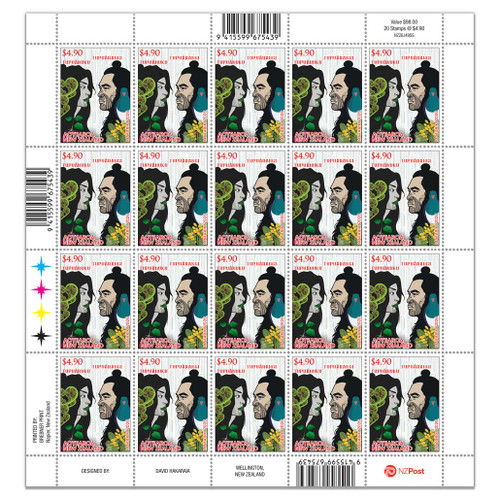

Sheet of 20 x $4.90 'Tupuānuku and Tupuārangi' stamps
Tupuānuku is associated with food grown in the ground, including cultivated crops and wild foods such as kūmara, potatoes, and roots. This relationship is reflected in the whakataukī: “Hauhake tū, ka tō Matariki” (The harvest is completed when Matariki sets). When Matariki disappears into the western sky in late autumn, it signals the end of harvesting and the approach of winter.
Tupuārangi governs food sourced from above the ground, particularly birds and fruit from trees. During the time of Matariki, birds such as kererū were harvested, cooked, and preserved in their own fat. This practice is remembered in the saying: “Ka kitea a Matariki, kua maoka te hinu” (When Matariki is seen, the fat is rendered). Tupuārangi connects Matariki to abundance from the forest canopy and the sky.
This stamp issue celebrates the Māori New Year. Click here for more information.
Check out the full range of stamp sheets here.
| Date of issue: | 1 July 2026 |
|---|---|
| Number of stamps: | Five gummed |
| Denominations: | $3.60, $3.60, $4.20, $4.90 & $5.80. |
| Stamps and first day covers designed by: | David Hakaraia, Wellington, New Zealand |
| Printer and process: | Brebner Print, Napier by lithography |
| Number of colours: | Four process colours. |
| Stamp size and format: | 30mm x 40mm (vertical) |
| Miniature sheet size and format: | 103mm x 93mm (horizontal) |
| First day cover size and format: | 205mm x 120mm (horizontal) |
| Paper type: | Tullis Russell red phosphor 106gsm |
| Number of stamps per sheet: | 20 |
| Perforation gauge: | 13.33 x 13.60 |
| Special blocks: | Plate/imprint blocks may be obtained by purchasing at least six stamps from a sheet. Barcode blocks are available in A and B formats. |
| Period of sale: | Unless stocks are exhausted earlier, these stamps and first day covers will remain on sale until 30 June 2027. |


