Foraging with Erin Forsyth
Posted by Lynette Townsend on 14th May 2026
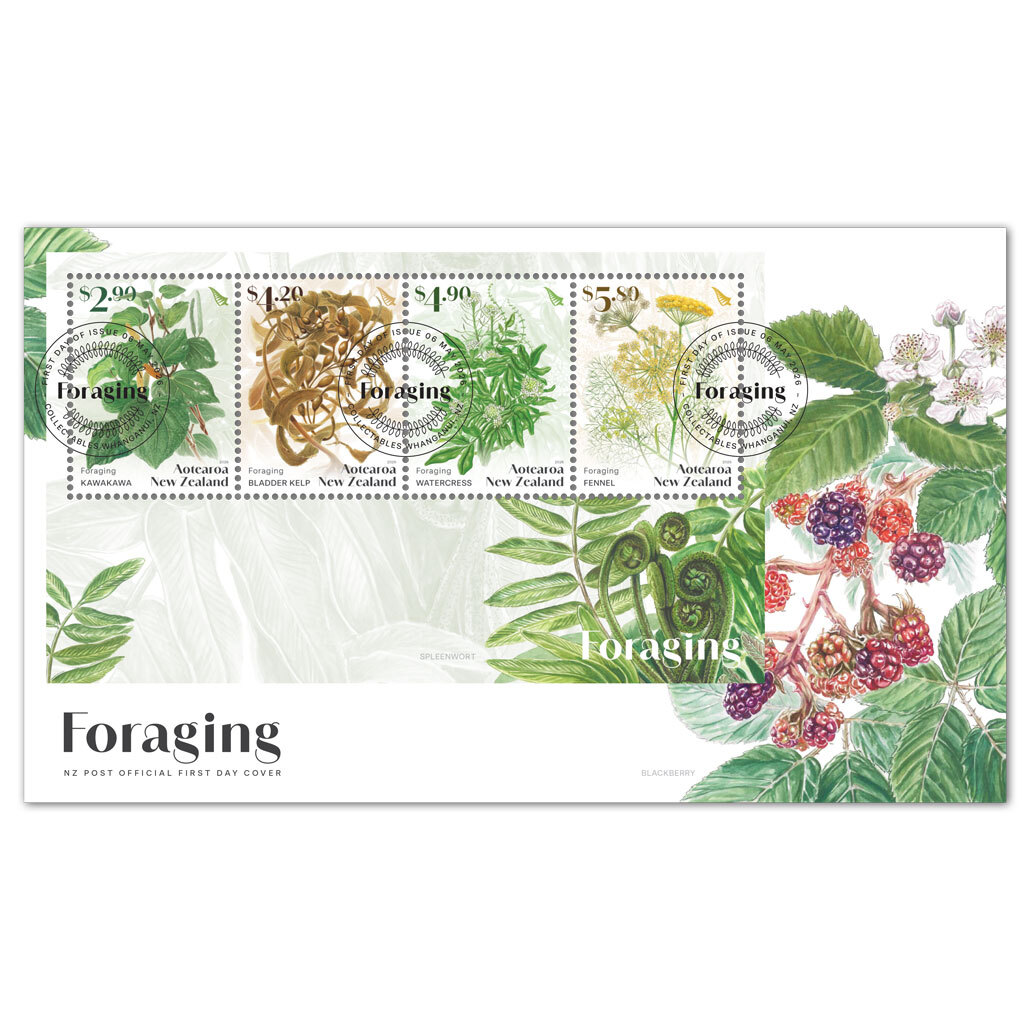
Erin Forsyth’s botanical art is the creative force behind the 2026 Foraging stamp issue. The original artworks were created by hand using Forsyth’s preferred medium for painting – gouache. Beginning with a pencil composition on messy paper, the final illustration takes form on water colour paper. Gouache is a type of water-based paint that enables high colour intensity by incorporating fillers like chalk. This makes the medium denser than watercolour, resulting in a matte finish and allowing her to produce transparent layers with fine opaque details. Forsyth also works with acrylic and is well known for her hand-painted botanical and wildlife murals adorning city streets throughout Aotearoa New Zealand.
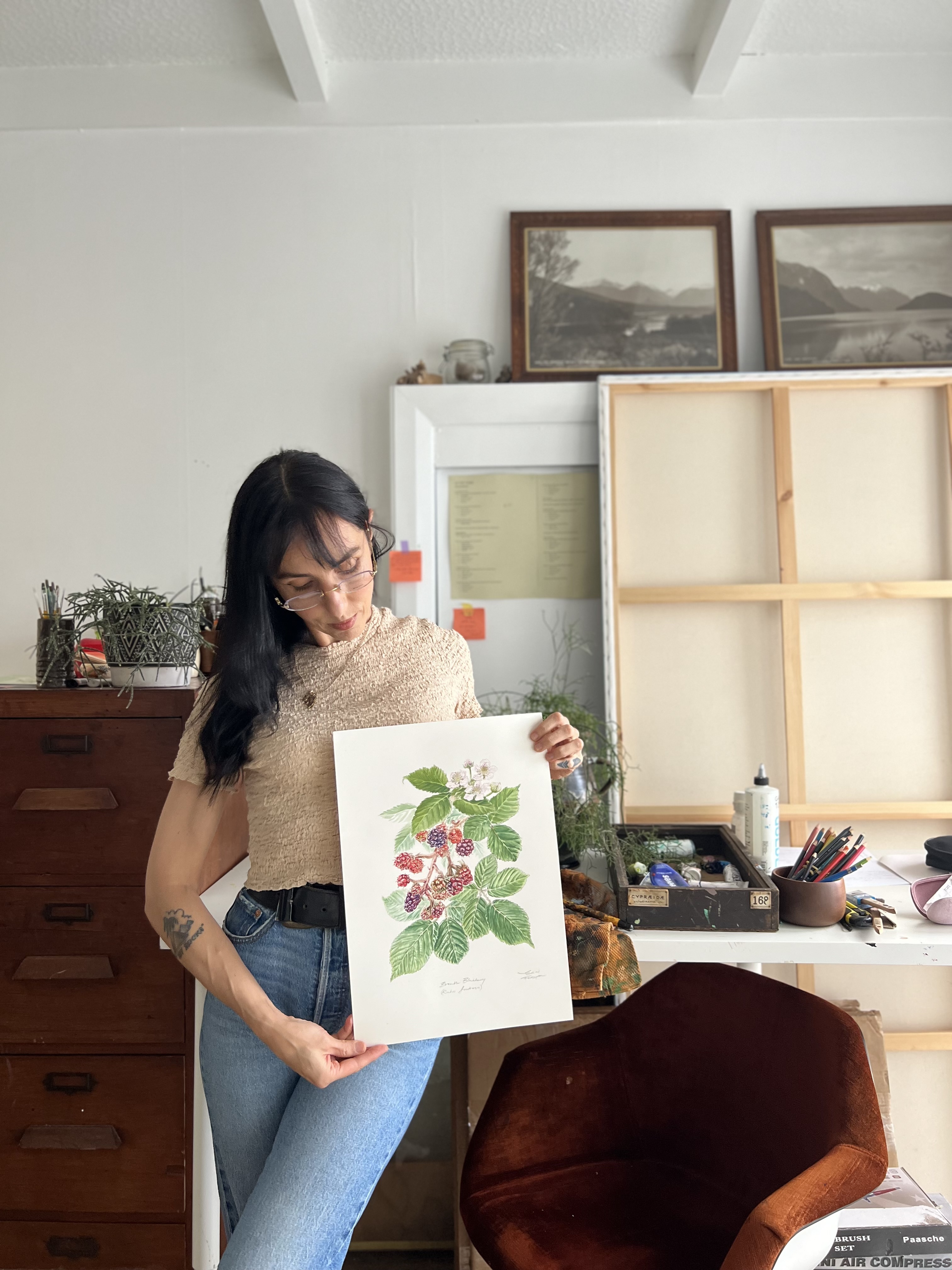
Forsyth likes to sketch from cuttings, but sometimes combines photographs she’s taken herself or found online to show every detail of a plant or animal. The stamp illustrations were mainly modelled from a range of photographs supplied by foraging expert Peter Langland. This was particularly necessary for plants that grow in places that are more difficult to observe, like seaweed. The finished artworks include incredible detail and inclusions like the tiny looper moth caterpillar on the kawakawa illustration.
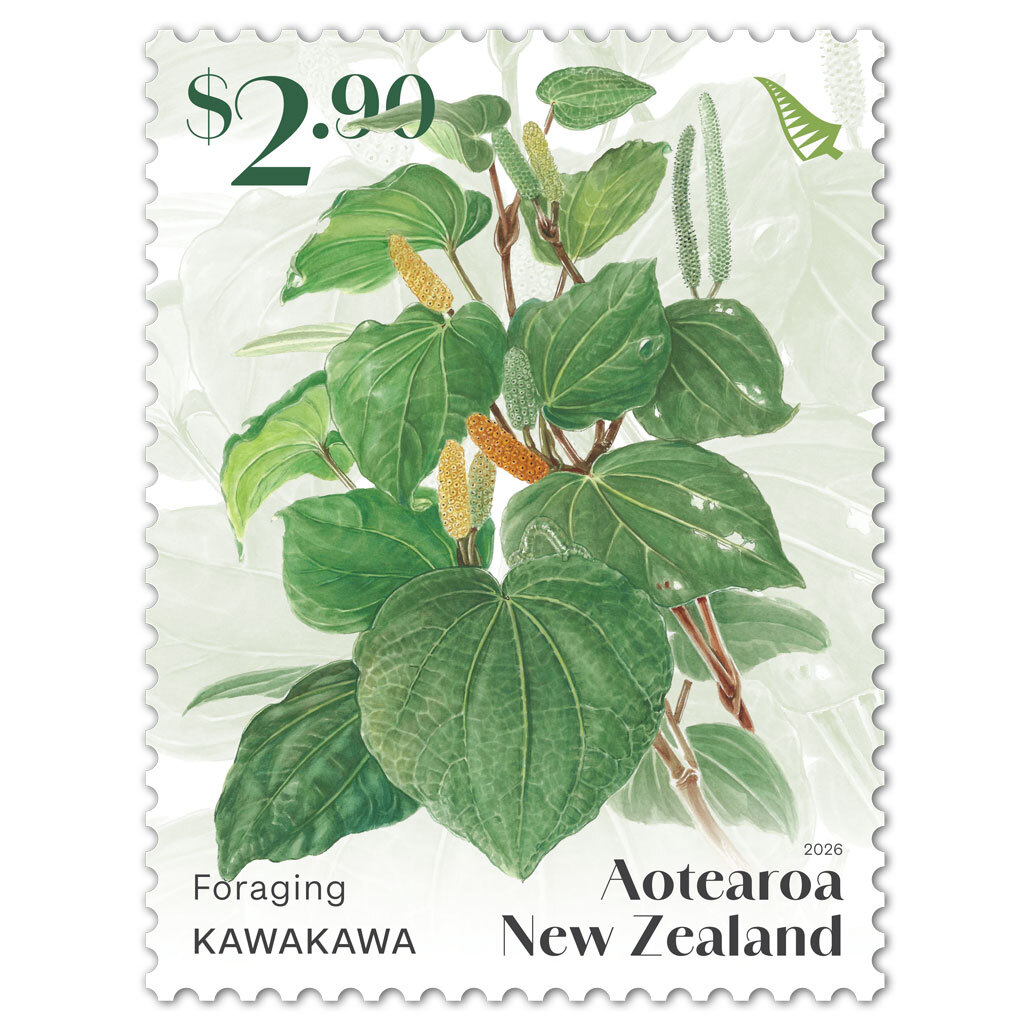
The caterpillar reflects Forsyth’s interest in the relationships between plants, animals and people, a focus she has explored for many years, stemming from childhood. One influence was a childhood home with a long driveway, adjoining native bush and unkept garden with a glow-worm cave. Her mother hid small plastic toys inside flowers, and they would often hunt for fairies. She also helped in her grandmother’s florist shop alongside other women in the family. Forsyth describes this as a special time that taught her to appreciate the beauty and significance of plants.
After working as a freelance illustrator for many years focusing on nature, Forsyth turned her attention to studying nature and completed a Diploma in Environment and Sustainability at the Open Polytechnic in 2017. She has also completed the Practical Field Botany course at the Cass Field Research Facility at Canterbury University. She is often out exploring and observing plants and animals in remote places and enjoys the variety Aotearoa has to offer. She explains that she often travels to specific locations to see particular plants in their natural habitat.

The plants featured on the stamps, miniature sheet and first day cover were selected by Peter Langlands. He aimed to show that plants can be foraged from a variety of types of locations including the sea, freshwater areas, in the bush or countryside. Native plants and introduced plants have been included. Langlands’ book Foraging New Zealand, published in 2024, includes a large variety of plants that can be foraged, and information on how to collect wild food safely and sustainably. Foraging courses have also become popular, and increasingly people are becoming adept at sourcing a free meal from the land using plants that have commonly been thought of as weeds. Foraging education in this country often includes information about tikanga Māori. Done safety and with respect, foraging is regarded by many as a fun way to connect with nature.
The stamp designs were completed by NZ Post’s Nick Jarvie. The subtle graphics beautifully complement the original artworks and ensure Forsyth’s illustrations remain the hero.