1 products
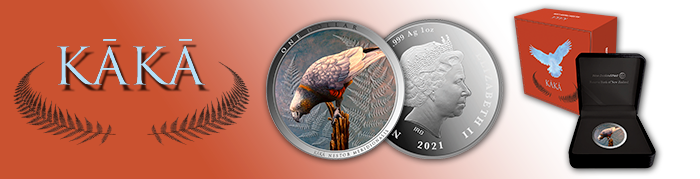
Kākā are olive-brown forest birds endemic to New Zealand. Not to be confused with the larger, greener kea, kākā boast a grey-white crown, a red-orange underwing and deep crimson belly and under-tail.
According to Māori legend, the kākā stole its bright orange-red feathers from the kākāriki (parakeet), concealing them beneath their wings. These showier feathers were used by Māori to decorate highly valued garments, and while kākā were also once a popular food source, they are now a protected species. When Europeans first settled in New Zealand in the early 1800s, these forest birds were observed in abundance. Within little more than a century, deforestation and predation by introduced mammals caused a dramatic reduction to the population, and the species is now localised to only a few areas.
There may be fewer than 10,000 kākā left in the world – however, these special birds have demonstrated their ability to thrive in the wild when protected from predators. In fact, the establishment and subsequent growth of a breeding population in Wellington city has led to damaged trees and even buildings, as the birds forcefully explore their urban surroundings with their strong beaks.