1 products
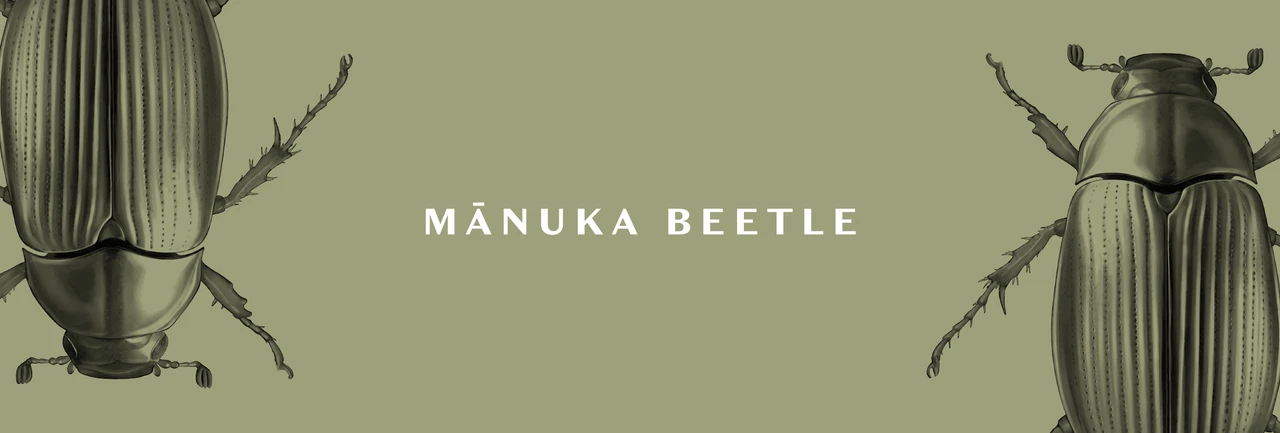
From mountaintops to the seashore, beetles are everywhere. Of all the animals on Earth, 30% are beetles; there are over 350,000 described beetle species in the world. Beetles are an essential part of our ecosystem, and they play important roles in decomposing waste, pest management and soil fertilisation.
These creatures have adapted to all kinds of diets. There are carnivores, herbivores, fungivores, and scavengers. Colours range from drab blacks and browns to bright reds and yellows, through to brilliant iridescent greens and metallic blues.
Aotearoa New Zealand is known to be home to more than 5,000 beetle species, most of which are endemic. It's estimated that the real number of local beetle species could be up to 10,000. The mānuka beetle (Pyronota festiva), known by Māori as kerewai, is an endemic scarab beetle. It is closely related to other beetles in the Scarabaeidae family that are found in other parts of the world.
This insect is common and widespread across New Zealand. Between 3mm and 25mm in length, its wings are a vibrant, glossy green with subtle areas of blue and yellow. Māori used them in traditional medicines to reduce fevers and stomach aches. The Victorians were attached to the bright metallic green colour and used Mānuka beetles in jewellery.
Trout are known to feed on mānuka beetles when they land on the water and fly fishers use ‘green beetle’ flies to imitate its iridescence. They are also known to be eaten by mice and sparrows. Although found in a wide variety of habitats, as the name suggests this beetle prefers to live in the soil around mānuka trees, where larvae feed on the roots, and adult beetles can be found feeding on the foliage.